Forgive me for a moment, I must talk shop, and I'm leaning heavily on the first person here because Schwitters has not been consulted:
As we've said repeatedly, and as recently as the second to last post, this project started as a joke and turned into something that we actually care about. Because of this, I'm not going to post the pictures I took in Paterson here. Check out ulmlls for that. I can't reconcile it in my head because Paterson the city is not Paterson the poem. Nor should it be. The poem doesn't need the "real" city, mainly because the poem is real with or without it.
Nonetheless, I did take--and willingly and excitedly--a trip to Paterson as a kind of pilgrimage. I teared up a little the night we entered. I saw some really totally awesome stuff--an incredible waterfall, a wacky castle, a wackier watchtower, and some cool, crumbling factories (from which I stole a brick). It was an exciting and awesome trip. But I did not find Williams's Paterson; his was in my backpack the whole time, and at no point did I dig it out. There was no reason to--Paterson and Paterson are not the same. Art is not ever accurate mimetic representation, but it is art and that's why it's important.
I don't know what this has to do with our project, other than to say that the city itself, at least for the few poems I've written, isn't what what I'm writing about. I'm not sure it's the poem either, though. And I mostly don't care.
Thursday, March 08, 2007

Tuesday, March 06, 2007
Photos from Paterson Trip

Follow the link above to view my album from the Paterson trip this past weekend. I'll post a full report on the goings-on in the next day or so, but for now, feast your voyeuristic eyes on all of the above. Briefly: Paterson is one awesome, inspirational, slummy town. Signing off, T. Az.
Thursday, March 01, 2007
On the Road

Conversely and I are leaving today for Baltimore, and by extension, Paterson, New Jersey. I know we're both excited about hitting the road, but I will say that, personally, this trip feels like a validation of this project for me. As we've said before, this whole thing came out of a joke after a class presentation - and now, looking back at what we've put out in the past four(?) months, I'm actually pretty proud. I think the Paterson Project is turning out to be pretty damn interesting, and I'm excited to see the town and the Passaic Falls and Garrett Mountain and all that, but I'm even more excited to see where this project takes us in the months to come (don't forget, we still have about twenty songs to write!). Anyway, if you're out there reading this, thanks for the interest so far, and we'll do our best not to disappoint in the future. Full report on Monday, I think. Signing off, T. Az.
Thursday, February 22, 2007
Paterson: Book Four, Chapter III, p. 194-95

**a note on the following: this poem is, frankly, too long. it has been stewing for some time, and after much consideration, i have decided to post it, in hopes of receiving much needed editorial and critical advice. to this extent, it is a work in progress. as someone who mostly hates apologetic prefaces, i'll shut up already. thanks, all.**
**CHANGE LOG:**
(2/24: added several sentences to V, in response to post 1; cut stanza 4 from III)
Fred Goodell Jr. and the Murder of His Daughter (Culminating in Her Burial on
I.
Paterson, N. J., Sept. 17 -- Fred Goodell Jr., twenty-two, was arrested early this morning and charged with the murder of his six-months-old daughter Nancy, for whom police were looking since Tuesday, when Goodell reported her missing.
Continued questioning from last night until 1 a.m. by police headed by Chief James Walker drew the story of the slaying, police said, from the $40-a-week factory worker a few hours after he refused to join his wife, Marie, eighteen, in taking a like detector test.
At 2 a.m. Goodell led police a few blocks from his house to a spot on Garrett Mountain and showed them a heavy rock under which he had buried Nancy, dressed only in a diaper and placed in a paper shopping bag.
Goodell told the police he had killed the child by twice snapping the wooden tray of a high chair into the baby's face Monday morning when her crying annoyed him as he was feeding her. Dr. George Surgent, the county physician, said she died of a fractured skull.
II.
Fred Goodell Jr., a factory worker, killed his daughter, six-month-old Nancy, by twice snapping the wooden tray of the girl's high chair into her face after her crying annoyed him. He then placed her in a shopping bag and buried her under a rock a few blocks from his house on Garrett Mountain. After refusing to take a lie detector test with his eighteen-year-old wife Marie the next day, Goodell was questioned until 1 a.m. by Chief James Walker of the Paterson Police Department, after which he led Walker and other officers to the rock on Garrett Mountain where Nancy was buried. Goodell was arrested and charged with murder within the hour.
III.
I got a home in that rock, well, don't you see?
Way between the earth and sky
I thought I heard my Savior cry
Well-a poor Lazarus poor as I
When he died he had a home on high
He had a home in that rock don't you see?
The rich man died and lived so well
When he died he had a home in Hell
He had no home in the rock, well, don't you see?
You better get a home in that rock, don't you see?
Way between the earth and sky
I thought I heard my Savior cry
Well-a poor Lazarus poor as I
When he died he had a home on high
He had a home in that rock don't you see?
The rich man died and lived so well
When he died he had a home in Hell
He had no home in the rock, well, don't you see?
You better get a home in that rock, don't you see?
IV.
I did not kill my daughter.
I did not kill my daughter.
What happened was an accident.
It could have happened to anyone.
V.
I closed the door, first thing - Marie had let it out for the evening breezes. I changed and she left for work, and I needed to wash the clothes, if there was time, and make sure I ate and fed the baby, all before the night shift started at two. There was food left out on the stove, and the baby had been sleeping most of the afternoon in her crib. Tired and clean, I woke her and lifted her into a high chair. She cried, loud and piercing, and then she bounced two tiny fists on the wood tray of the chair, the silver springs wobbling and ringing each time with the metal-on-metal crash. The metal and crash, the metal and crash, and the tray bouncing up with each hit and the tiny fork and spoon rattling with the vibrations. Her sound disappeared inside itself, the way a word disappears inside itself if you look at it too long, no longer making sense as a whole, but only as strange, separate parts: scream and moan, air in and then pushed, hard, out. A man couldn't stand it, with the factory in a few hours and dinner getting cold:
I pulled down the lever, and released.
I pulled down the lever, and released.
VI.
in two, it was done, and I expected
silence (I did); the ghastly kind, where I could hear
my heart beating in my chest or
a hum in my ears, rising up louder and
blocking all the other things out -
but what I got wasn't a humming, or my heart,
but a rushing sound of in-out waves, far off,
like a big broom sweeping over stones,
and then a dog barking a few blocks off, irregular,
with another sounding back -
I looked out the window for it (I did);
the glass caught my stare a bit, and I could see
the white frilly curtains blowing with the window open, too;
and the yellow light of the tall streetlamp sort of pooling
on the grass and the stones at the bottom of the hill.
And slow, very slow, I led my head down,
led my eyes from the window, to the floor, to the table,
and I looked at it, still sitting there, still,
and expected something awful -
but not in the way this was awful:
VII.
"We've got something over here, sir."
(lifting a rock)
"It's wrapped up, but it's been crushed pretty good."
(opening the bag)
but instead its face mashed in the front,
scrunched up like it had tasted something sour,
and bruising fast as I watched it, that red-purple of a baby-face
darkening to black around the nose and around the squinted-up eyes;
the tongue was out, just a tiny grey sliver,
and all the while the shine of the skin was fading dull and flat,
like the skin of a peach.
there weren't no blood.
none at all, but that in the bruise.
it surprised me.
it was all so dry.
IX.
This world is a wilderness of woe
So let us to glory go
Dying is a blooming rose
And none but them who feel it know
I did not kill my daughter.
I did not kill my daughter.
What happened was an accident.
It could have happened to anyone.
V.
I closed the door, first thing - Marie had let it out for the evening breezes. I changed and she left for work, and I needed to wash the clothes, if there was time, and make sure I ate and fed the baby, all before the night shift started at two. There was food left out on the stove, and the baby had been sleeping most of the afternoon in her crib. Tired and clean, I woke her and lifted her into a high chair. She cried, loud and piercing, and then she bounced two tiny fists on the wood tray of the chair, the silver springs wobbling and ringing each time with the metal-on-metal crash. The metal and crash, the metal and crash, and the tray bouncing up with each hit and the tiny fork and spoon rattling with the vibrations. Her sound disappeared inside itself, the way a word disappears inside itself if you look at it too long, no longer making sense as a whole, but only as strange, separate parts: scream and moan, air in and then pushed, hard, out. A man couldn't stand it, with the factory in a few hours and dinner getting cold:
I pulled down the lever, and released.
I pulled down the lever, and released.
VI.
in two, it was done, and I expected
silence (I did); the ghastly kind, where I could hear
my heart beating in my chest or
a hum in my ears, rising up louder and
blocking all the other things out -
but what I got wasn't a humming, or my heart,
but a rushing sound of in-out waves, far off,
like a big broom sweeping over stones,
and then a dog barking a few blocks off, irregular,
with another sounding back -
I looked out the window for it (I did);
the glass caught my stare a bit, and I could see
the white frilly curtains blowing with the window open, too;
and the yellow light of the tall streetlamp sort of pooling
on the grass and the stones at the bottom of the hill.
And slow, very slow, I led my head down,
led my eyes from the window, to the floor, to the table,
and I looked at it, still sitting there, still,
and expected something awful -
but not in the way this was awful:
VII.
"We've got something over here, sir."
(lifting a rock)
"It's wrapped up, but it's been crushed pretty good."
(opening the bag)
VIII.
but instead its face mashed in the front,
scrunched up like it had tasted something sour,
and bruising fast as I watched it, that red-purple of a baby-face
darkening to black around the nose and around the squinted-up eyes;
the tongue was out, just a tiny grey sliver,
and all the while the shine of the skin was fading dull and flat,
like the skin of a peach.
there weren't no blood.
none at all, but that in the bruise.
it surprised me.
it was all so dry.
IX.
This world is a wilderness of woe
So let us to glory go
Dying is a blooming rose
And none but them who feel it know
X.
pulling it up out of the seat, my belt caught the wood tray,
and it snapped it on the hinges, a loud pop and then
__________________________a loud pop and then
a rattle to settle it down.
XI.
holding it was quiet; quiet, light and warm; and I couldn't do nothing with it warm like that, so I set it on the table, on its back to wait until the warmth was less.
I thought about dinner, cooling,
and then: a bag, for groceries; thick.
and everything was as loud as you would think: popping air into the bag to open it up, opening up a place on the counter, picking up the weight and sinking it down in to the bottom. from the handle, everything was more right, and I stepped out to do it.
I knew the place without planning it, and I went the few hundred yards to the stone:
a larger rock on the slant-face of the mountain.
there had been snakes underneath it in the spring, but they had cleared with the frost
and room was there;
my thoughts spread loose:
a cold, huddled spot in the belly of the mountain --
tomb.
I placed the shopping sack inside and thought if I needed
a rope to tie her in place with.
but I did not have one.
rolling the stone back:
"nancy"
but between us, only.
between us.
XII.
XIII.
there weren't nothing to it with Marie, just:
I don't know what happened, she was gone, and
I went to the back of the house with the front door unlatched...
But she put a hand to her stomach and knew,
and she cried for it, silent.
There was no noise from the police, either.
The lights were not on. Just dark car-shapes and wheels crunching up
from the bottom of the hill.
I sat waiting.
My shift was still a few more hours. I hadn't ate nothing.
I sat waiting.
The table seemed to glow a bit, with the kitchen light shining down on it
and with nothing placed on top, so the reflection just caught it all and held it in that way light can do,
with the dark outside.
When they came in, they sat, opposite,
and one put both his hands on the lip and then raised back up to stand.
I watched his fingers push down, white around the nail, and then slide off backward.
But nothing happened.
Nothing happened.
XIV.
1st dr.
KMC 02-21-07
pulling it up out of the seat, my belt caught the wood tray,
and it snapped it on the hinges, a loud pop and then
__________________________a loud pop and then
a rattle to settle it down.
XI.
holding it was quiet; quiet, light and warm; and I couldn't do nothing with it warm like that, so I set it on the table, on its back to wait until the warmth was less.
I thought about dinner, cooling,
and then: a bag, for groceries; thick.
and everything was as loud as you would think: popping air into the bag to open it up, opening up a place on the counter, picking up the weight and sinking it down in to the bottom. from the handle, everything was more right, and I stepped out to do it.
I knew the place without planning it, and I went the few hundred yards to the stone:
a larger rock on the slant-face of the mountain.
there had been snakes underneath it in the spring, but they had cleared with the frost
and room was there;
my thoughts spread loose:
a cold, huddled spot in the belly of the mountain --
tomb.
I placed the shopping sack inside and thought if I needed
a rope to tie her in place with.
but I did not have one.
rolling the stone back:
"nancy"
but between us, only.
between us.
XII.
Oh, my father had the stone
That was hewn from the mountain,
Oh, my father had the stone
That went tearin' through the world.
That was hewn from the mountain,
Oh, my father had the stone
That went tearin' through the world.
XIII.
there weren't nothing to it with Marie, just:
I don't know what happened, she was gone, and
I went to the back of the house with the front door unlatched...
But she put a hand to her stomach and knew,
and she cried for it, silent.
There was no noise from the police, either.
The lights were not on. Just dark car-shapes and wheels crunching up
from the bottom of the hill.
I sat waiting.
My shift was still a few more hours. I hadn't ate nothing.
I sat waiting.
The table seemed to glow a bit, with the kitchen light shining down on it
and with nothing placed on top, so the reflection just caught it all and held it in that way light can do,
with the dark outside.
When they came in, they sat, opposite,
and one put both his hands on the lip and then raised back up to stand.
I watched his fingers push down, white around the nail, and then slide off backward.
But nothing happened.
Nothing happened.
XIV.
Where shall I go?
Where shall I go?
Where shall I go for to ease my troubled mind?
I went to the rock to hide my face
For to ease my troubled mind;
The rock cried out "no hiding place"
For to ease my troubled mind.
The man who loves to serve the Lord,
For to ease my troubled mind,
Will sure get his just reward,
For to ease my troubled mind.
Where shall I go?
Where shall I go for to ease my troubled mind?
I went to the rock to hide my face
For to ease my troubled mind;
The rock cried out "no hiding place"
For to ease my troubled mind.
The man who loves to serve the Lord,
For to ease my troubled mind,
Will sure get his just reward,
For to ease my troubled mind.
1st dr.
KMC 02-21-07
Friday, February 09, 2007
A Brief, Paterson-related Announcement

For any of those who find these types of things interesting, Conversely and I will be visiting the town of Paterson, New Jersey, locus of Williams' epic poem and inspiration to this project, on March 3. Our hope is to have all the poems done by that time, with the exception of "The End (Oh, Passaic)," which we each hope to compose a draft of from the shores of Passaic Falls State Park. If we can stand the pressure. In any case, the trip feels like a validation, at least to me, of what we've been doing here, and I'm very excited to walk down the Bourse and River and Ison Streets for myself, looking for the haunts of Ginsberg and Williams before him, and maybe even having a drink from Godwin's Taproom, across from the old county courthouse. Rest assured, we will write up the story of our travels when the time comes, but until then, be thinking of your friends and faithful travelers...
Thanks, everyone.
T. Az.
Thursday, February 08, 2007
Paterson: Book Four, Chapter III, p. 199

The Man Facing Death
River, why do I think of you?
What, in your long history, am I?
That that was loosed from the deep split of stone?
That that runs carelessly over pulp earth between ribs of high granite?
That that will give itself too quickly, in time, to the stream?
And where were you in those moments of gathering, of
Self pulled to Other, of
Broad to Collective, of
A Push in the Back at the Lip of the Falls?
Where was I?
When was I?
Why do I think of you?
Whose hope was this, that water move onward?
That it move downward, in weight, in gravity, from stone?
That it roll as one over miles of sand and sunken limbs
to break around the bone of an ankle dipped, giggling, in?
That it slow, slow, spread wide at its end,
reach thick over steady undertows and then lift,
as the sole of a foot in stride,
up from the opposed tides to meet breeze, gulls, cross-current air?
Why, if the sea is ever a bringing in?
I ask again: Why is the sea ever a bringing in?
I hear this rhythm endlessly.
And this, too, River:
At times, did you also feel it was the shore moving past us?
I remember dreaming once, of towns flowing endlessly through our vision,
the strange, solid-land feel of a surface sliding on, on, and out...
What, in your long history, am I?
This wave, or
the next?
This wave, or
the next?
This wave, or
the next?
Do you still know?
And will I yet be living?
KMC 02-08-07
Friday, February 02, 2007
Paterson: Book Four, Chapter III, p. 202

The Trial, Conviction, and Execution of the Murderer John Johnson
John Johnson, from Liverpool, England, was convicted after 20 minutes conference by the Jury. On
I
John Johnson son of son of John hanged for his hatchet work.
Johnson, John, son of son of John hanged for his hatchet work.
John Johnson son of son of a grandfather hanged for his hatchet work.
His hatchet work was among the best in the business.
His best work was his hatchet business.
II
After twenty minutes it was his head for which they called.
The passive voice removes responsibility.
After twenty minutes they called for his head.
The jury has decided the active voice is best.
III
Some hinges are terrifying.
John Johnson's hatchet work was killer, but some hinges are truly terrifying.
Verily.
IV
They gathered (like they would some years later at Wrigley) to see just how terrifying two simple hinges can be.
And they all said, "Verily, verily. Terrifyingly true."
V
A wild chant rose up
while he rose up
the crowd rose up:
"Now is the time for all good men to come to the aid of their country!"
And to its aid they came.
Spectacle of spectacles!
Look at how those hinges glint!
VI
There comes a time in every executioner's career that he removes the hood or hopes he isn't shooting blanks.
VII
"Any last words?"
"No"
VIII
But blanks will be shot.
IX
X
I would like to think (I would like to
think to you I am thankful I think.
Such thoughts are fruitless; I really ought to forget
all this fruitless thinking.
But perhaps I should have said something. (I would like to think for just a little longer, though.)
XI
Late that evening in
---
John Johnson from
gbs 1-31-07
Paterson: Book Four, Chapter III, p. 190

The Difficulties of Holding All Together in the Mind
fishing, late, the heavy wound weight of the net drops quickly down from the long, black boon and spreads, thickly, across a surface:
water, tensely held to itself, rolling eagerly in a way that is bound, binding; as ropes break it, are swallowed, darken beneath the surface; as a gear clacks loud, close, letting more loosed rope out and down.
jolting, the boat moves forward as a second rumble from aft stretches further backwards until taut and holds --- engines pull an equal weight behind us, unseen, soon in black-green water, ballooned in opposite motion.
motors stop in a suitable time, wenches tighten engage dredge pull on the draws of the purse-seine as it brings up the first flashing, clapping grays.
loads change in sudden fashion, the water-weight rushing in thick columns out, the stunned and gasping fish, a moment ago weightless, piling in thick mass as the net is lifted up from the ocean, long strands of kelp dangling limply as water channels their lengths and runs steadily down.
with a deep movement, the deck rocks backward in relief, the sea no longer its responsibility.
watching, with a gloved hand I pull hard against the cold, metal handle of the hold-latch and listen: to the echoing patter of water falling from cord, from knot, from crushed bodies, from open mouths and down to the grease-slick floor.
with another motion the net opens and there is a singular sound,
____________________before the lapping of waves resumes against the bow.
Wednesday, November 08, 2006
Paterson: Book Four, Chapter III, p. 191-92

* This poem is the second in a series dealing with the Haitian President of Williams' text. The first part can be read HERE.
Women to the Haitian President, upon Gathering at Dusk near Point Croix
We
who have been your lovers
have talked this through:
Yes,
our beauty is collective.
It is spun
from the sameness of our contours,
it is outlined
in black, gathered
and flocking against
the background of our dusk,
where we have been threaded
over that losing light,
crossed and woven
in darkest silhouette
upon the loom;
and Yes,
the shape of breasts we know
are enough, more than -
doubled and doubling
the smaller joy of your
heart,
so much of us
in pairs
you'd say;
we say
your conclusions could only be
reached this way:
multiplicitly.
But Man,
who loved us each
divided, parts of
a whole seen so
distantly,
great God, what you did not know
in this shadowed shape,
What!
Our eyes;
twinned depths
of night, suns each
setting on waters paired
and equally bottomless.
Dearest man,
I say,
as I, as
I, as
I, as
I:
what love,
love, love,
for this beauty
has been lost?
KMC 11-8-06
Tuesday, November 07, 2006
Paterson: Book Four, Chapter III, p. 188-189

Virtue and the Death of the Grandmother
I.
What is your virtue and
what has it become?
A process.
A bird.
Stout, with stringy flesh,
tough, peppered skin.
Oh do no,
do not eat that turkey--
she's barely cold.
What are we doing here?
Our lives,
because we are not the one dead
will go on, but not now no not now no.
Amuse her! Amuse him!
She is my muse and I refuse to go on.
II.
Not now no not now no.
_____________________"But yes. The past is for those like me, though not quite
_____________________cold, cold I will be. And soon."
No not now no not now no!
_____________________"Your virtue, stout as it is, must grow stouter, must become _____________________more. Continue becoming. Go on."
Be coming and going?
_____________________"Yes. I am growing colder and you are growing stouter
_____________________and fatter. Do not limp."
Oh do not, I can not, oh what not can I say, oh how to end the awful wait?
_____________________"The wait will be light. It is the dark that will not be. It is
_____________________the now that I have that you will lament. Go. Become."
Become? Become? Not now! My God, my God why has thou--"
_____________________"Do not quote. Become. Go. Go on. You will find yourself
_____________________stout if you move. Go become."
But what of you?
_____________________"My self stiffens and grows colder. Come now, be going."
But what of becoming?
_____________________"Be coming and going."
gbs 11-6-06
Monday, November 06, 2006
Paterson: Book Four, Chapter III, p. 193
Another Letter from A.G.
Dear Doctor:
I'm writing to you because you
have forgotten something
I found it, walking the streets
nearest the River today
Doctor? Of course
as if it were you, sir -
that is to say:
But that sound that reaches
from the Manufactory
of streets to the very City Square
sound of it
to that which does not howl
are wont to
I found the pubs, you know
the ones: off Mill and River Sts.
most move about these days
you know it is quiet, but
I walked the Bourse to
drunk and hanging out
ping in a chair, al-
ing smell of propane
stove somewhere in-
out from the cracks and the
ing down the narrows
ing out to me and pour-
taste it, on the back
sweet almond-gas swill
I moved on and past
to my home
Watching this man sway,
Doctor,
what I found that was once
running, Doctor, and I'm off
in it at the start.
Doctor. What you lost is not
if you run.
A.G.
Tuesday, October 24, 2006
Paterson: Book Four, Chapter III, p. 190-92

The Haitian President to His Women, on the Sight of Swallows Flocking in the Waters off Fort Dauphin
Quite often from my house, I see swallows
moving in a wide sweep over the harbor
as one, the denseness of them somehow
flat and twisting as a loose ribbon or
flag might, if wrested from its mooring and
blown haphazardly in rough gusts of wind.
It is the sameness of motion that most
delights me; the hundred bodies turning
in tight unison, wrapping around ghosts
of invisible up-drafts now churning
in the late day heat of the western shore -
and with them, a lone thought rises, and sings:
my beauty is in this rushing chorus,
this doubled beating of separate wings.
KMC 10-24-06
Here are My Keys, Go Up and Help Yourself
Without further ado, we present the third song-offering for the Paterson Project: "The Incomplete Seduction of a Scholar and Clerk; or, 'Here are My Keys, Go Up and Help Yourself." As before, you can access the poem page HERE and the song file HERE. This one has a few ch-ch-ch-changes, so check 'em both out and see what you think.
Oh, and then tell us what you think. All you silent site-checkers are makin' me nervous...
Oh, and then tell us what you think. All you silent site-checkers are makin' me nervous...
Friday, October 20, 2006
Song 2: The Murder of the Dutchman
The second rough cut of a Paterson Project song is now up on the "Murder of the Dutchman Jonafen Haring" page. For those about to rock: we salute you.
Click HERE to go straight to the audio file.
In related news, we will be posting "lyrics" and (what do you think, LaValle?) possibly music for these songs soon. We will also put up any revisions to songs in the same manner that we post revisions to poems: erase the first one and give you the one that's totally better. So, if any of this changes, you will be the first to know. As for now, enjoy another entry in the Project's second wave - I have to say, I think this one is niiice.
How many extra vowels can you put in your response?
Click HERE to go straight to the audio file.
In related news, we will be posting "lyrics" and (what do you think, LaValle?) possibly music for these songs soon. We will also put up any revisions to songs in the same manner that we post revisions to poems: erase the first one and give you the one that's totally better. So, if any of this changes, you will be the first to know. As for now, enjoy another entry in the Project's second wave - I have to say, I think this one is niiice.
How many extra vowels can you put in your response?
A Note on Translation; or, Striking Up A Chord
The Paterson Project is extremely proud to announce the first entry into the second phase of this enterprise:
Contributor Gaston LaValle has started working on translating the poems Conversely and I have been putting together here on the site into lyrical - and, in due course, musical - form. And we've got the first batch of initial recordings in stock. The first song going up is LaValle's quite-faithful rendition of "The Skeleton of Peter the Dwarf." The link below will get you straight to the sound file, but if you want the poetry at your fingertips as you take it all in, please go to the poem's existing page and link to the Internet Archive (who is hosting our music so graciously) from there.
Two more songs should be up by tomorrow, and after that, it will be up to you guys to keep this thing rolling - not unlike a mythical fairy, LaValle needs the sounds of your hands clapping to keep his light shining - so let's all go hit up the message board!
THE LINK: "The Skeleton of Peter the Dwarf"
This is an ecstatic T. Azimuth signing off - you all take care of yourselves.
Contributor Gaston LaValle has started working on translating the poems Conversely and I have been putting together here on the site into lyrical - and, in due course, musical - form. And we've got the first batch of initial recordings in stock. The first song going up is LaValle's quite-faithful rendition of "The Skeleton of Peter the Dwarf." The link below will get you straight to the sound file, but if you want the poetry at your fingertips as you take it all in, please go to the poem's existing page and link to the Internet Archive (who is hosting our music so graciously) from there.
Two more songs should be up by tomorrow, and after that, it will be up to you guys to keep this thing rolling - not unlike a mythical fairy, LaValle needs the sounds of your hands clapping to keep his light shining - so let's all go hit up the message board!
THE LINK: "The Skeleton of Peter the Dwarf"
This is an ecstatic T. Azimuth signing off - you all take care of yourselves.
Monday, October 16, 2006
Paterson: Book Four, Chapter III, p. 197
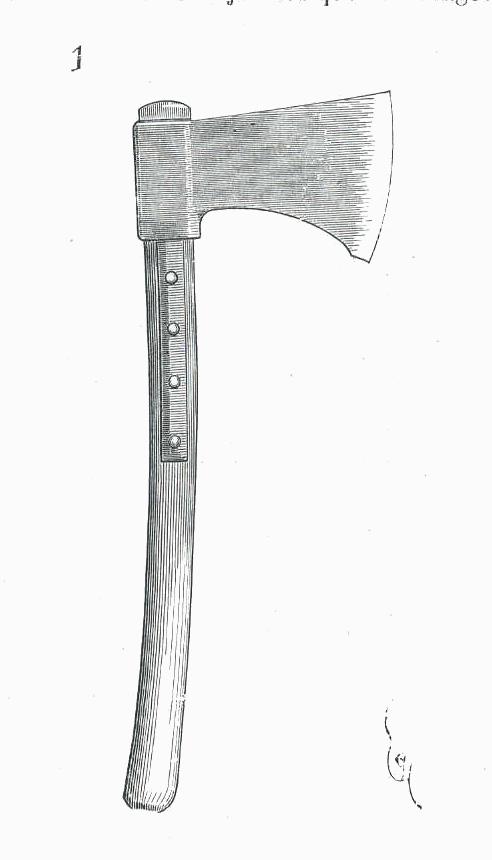
The Murder of John S. Van Winkle and his Wife by a Robber in the Winter of 1850
He stole through the snow,he stole in the night,
noiseless wheels crunching.
Walking wheels--walking, so
circular, a sine wave rolling
endlessly step after step--noiselessly
wheeling footsteps
toward an old housewife,
her husband, his house. There
to rob, with a chop, to end
Van Winkle's sleep with
a hatchet--a hatchet!--in a
sternum sounding
--curiously--
like a hatchet in a tree.
The Van Winkles awake, spill
and he steals back home
considering his wares as fallen
leaves.
gbs 10-16-06
Wednesday, October 11, 2006
Paterson: Book Four, Chapter III, p. 186
The Language as Virgin Purpose; or, Illumination
"Begin
at the beginning,
Brother."
This cry rings out across the
hot wood-pew place of this
summer Sunday, this
Amen! this
Glory! this
Hallelujah!
And with these most lowly
I am,
all these words in my
ears holding a perfect purpose
at tongue's long distance
from me.
Where are Your most-golden trumpets, Lord?
I ask; the angels gathered in the sky?
The fish in great numbers, the day in midst of night?
Where, in
this sun-white place,
this house of hollow voices,
am I?
And in a whisper
of leaved branches
against the nearest wall:
the words are why we're here.
---
Speak, oh God,
speak --
form me
in the roll of your tongue,
in the sounding of me
out;
stirred from dissonance
to being,
spoken,
spoken from and
for.
---
Here,
here in the filth of
this house, Father,
boards cracking long down the walls,
floors scarred and rubbed smooth
with a thousand feet
and knees
worn,
find me,
and hear:
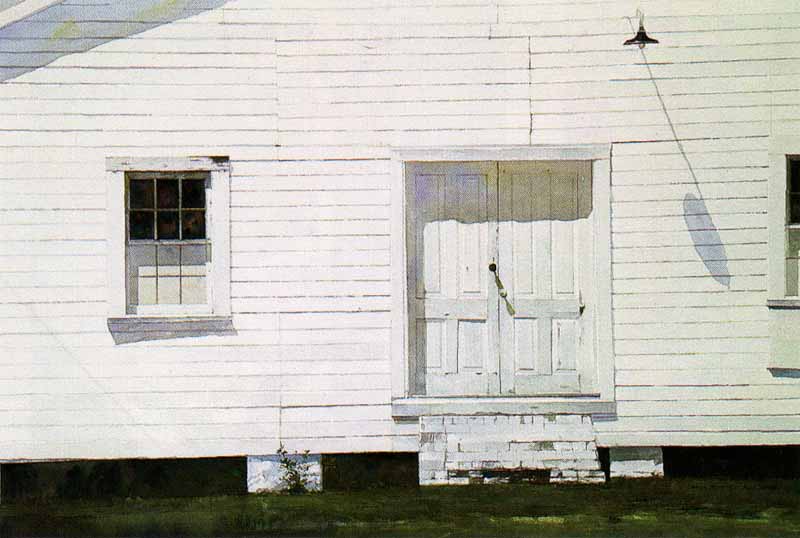
the light is going down outside this
old building;
the sun is nearing the horizon
and the white
clapboard white
of this body will glow,
gold and yellow,
in the last light --
for a moment,
a long moment.
We do not light it.
Tell me I'm clean,
and I will be clean.
Tell me I'm clean,
and I will be clean.
Tell me I'm clean,
and I will be clean --
Hosanna.
KMC 10-11-06
Sunday, October 08, 2006
Paterson: Book Four, Chapter III, p. 197-198

"What have I done?" A Claim and Question
What have I
done?
Indeed, what have
you done?
What have
__________I
_________________done?
Indeed, what have
you done?
What
_____have I
Indeed, ___________done?
what have you done?
What
_____have
Indeed, _____I done?
what have you done?
What
Indeed, have
what have you done? I done?
What,
in deed, have
what have you done? I
_________________done?
gbs 10-08-06
Monday, October 02, 2006
Paterson: Book One, Chapter I, p. 15-16 and Jane Eyre, second to last page (unless you have a copy with really large or really small print).
Dear Reader[s],
So, due to several questions from readers (only one of which has had the nerve to respond to us on the blog, unafraid to face us even if we're bad poets and you're embarrased to tell us), we have clarifications on our modus operandi. Actually, it's more of a complete restatement than a clarification. We're taking chapter three of Paterson IV and using the themes/language of the poem as a springboard for our poems. They occassionally contain direct quotations (which we will continue to leave unattributed). They more often contain gross exaggerations of thematic material. We often have little or no evidence from Paterson for our characters' characterizations. We just make that up. Sometimes plot elements are also invented. In fact, every time, thus far. Fairly often we'll reference other poets and pop culture icons like Bob Barker. The titles of the posts serve as a kind of work cited page; we like that better than using the titles of the poems because we do not believe we're being original enough to call the poems' titles official blog titles. Also, it's how we started and we really dig uniformity.
All will continue unapologectically because some things can be done as well as others.
With apologies,
Schwitters and Conversely
P.S. We just discovered that we were doing the same thing. One of us wrote an explanation--a "What We're Up To"--in the sidebar. The other of us did it right here. We're leaving both because, as you can see, some things can be done as well as others.
So, due to several questions from readers (only one of which has had the nerve to respond to us on the blog, unafraid to face us even if we're bad poets and you're embarrased to tell us), we have clarifications on our modus operandi. Actually, it's more of a complete restatement than a clarification. We're taking chapter three of Paterson IV and using the themes/language of the poem as a springboard for our poems. They occassionally contain direct quotations (which we will continue to leave unattributed). They more often contain gross exaggerations of thematic material. We often have little or no evidence from Paterson for our characters' characterizations. We just make that up. Sometimes plot elements are also invented. In fact, every time, thus far. Fairly often we'll reference other poets and pop culture icons like Bob Barker. The titles of the posts serve as a kind of work cited page; we like that better than using the titles of the poems because we do not believe we're being original enough to call the poems' titles official blog titles. Also, it's how we started and we really dig uniformity.
All will continue unapologectically because some things can be done as well as others.
With apologies,
Schwitters and Conversely
P.S. We just discovered that we were doing the same thing. One of us wrote an explanation--a "What We're Up To"--in the sidebar. The other of us did it right here. We're leaving both because, as you can see, some things can be done as well as others.
Friday, September 29, 2006
Paterson: Book Four, Chapter III, p. 187
A song is now available for this poem on the Internet Archive!
The Incomplete Seduction of a Scholar and Clerk; or, "Here's My Key, Go Up and Help Yourself."
I.
Thank Jesus you're sleeping
at last in the dark.
I know it from the sigh that
escapes-
in each odd breath,
While too quickly I move
from the still-made covers,
and do not dress as I
switch on
the lamp near the wall.
In -light- the room's read:
books in each corner,
on each table and each
chair, all
bound thick in cold leather.
II.
And in light, you will open
as blank pages do open,
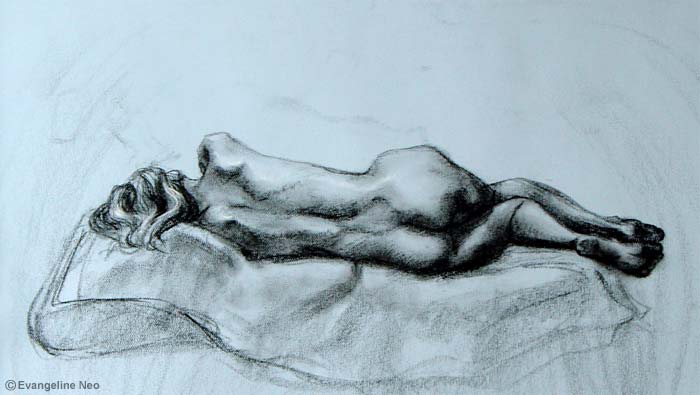
and the white of your back
will part and then fold -
along the ridge of your spine
still shadowed in night:
two thin pages facing
two thin pages facing
---
III.
My finger is tracing
the lines of your shoulder,
reading your skin
as it
might letters in Braille;
Moving above the
slight rise of your lungs
across ribs even-spaced,
stan-
zas unspoken, I--
Break the rough still-
ness of night in the room
with my own sound of
air mov-
ing thin from my lips-
And I will not tell you
Not ever tell you
Not ever tell you
it was not with the [sound of trumpets],
but a whimper.
KMC 9-27-06
Subscribe to:
Posts (Atom)